



Nature is my source of life, my sacred refuge where I find peace and inspiration.
Quiet rooms
and luxury
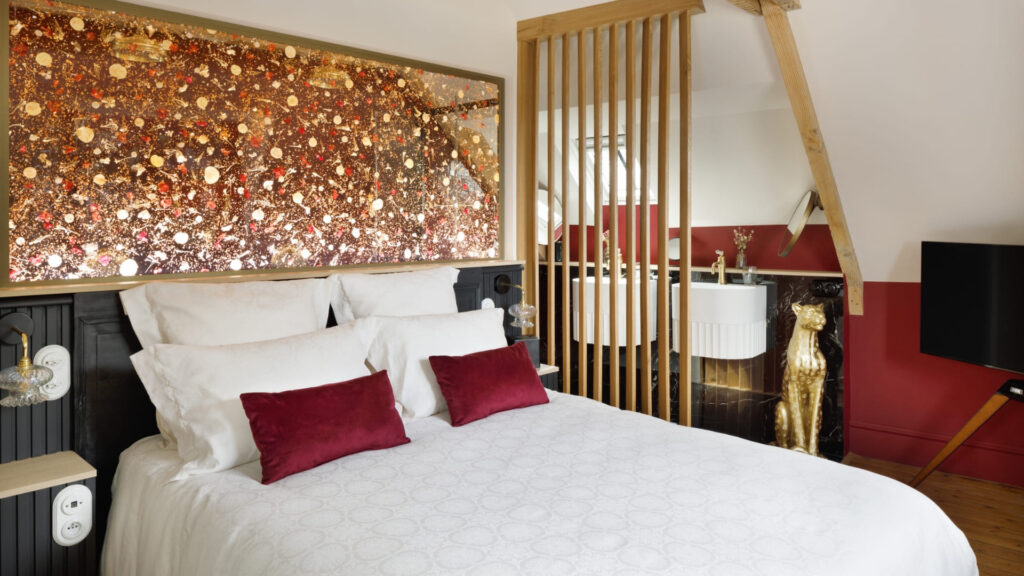
Perched on the third and top floor of the house, the Josephine Baker room is an exceptional jewel, combining charm, refinement and uniqueness. From the moment you arrive, let yourself be seduced by the soothing, sophisticated atmosphere.
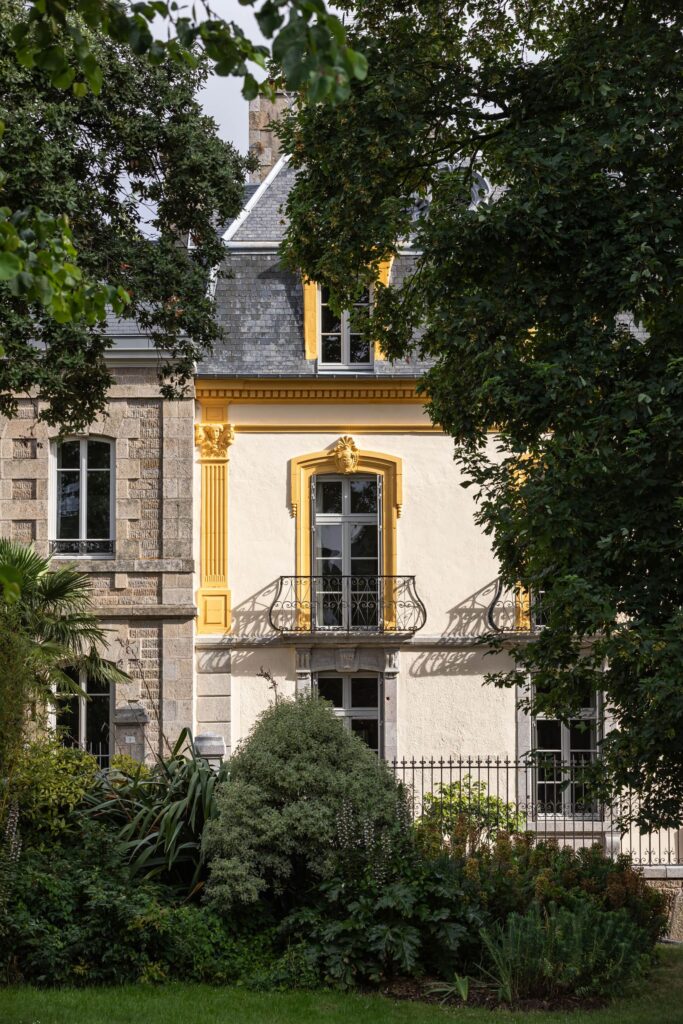
From your windows, enjoy a breathtaking panoramic view of Dinan’s rooftops and the medieval city’s emblematic monuments – a living spectacle that changes with the light of day and invites contemplation.
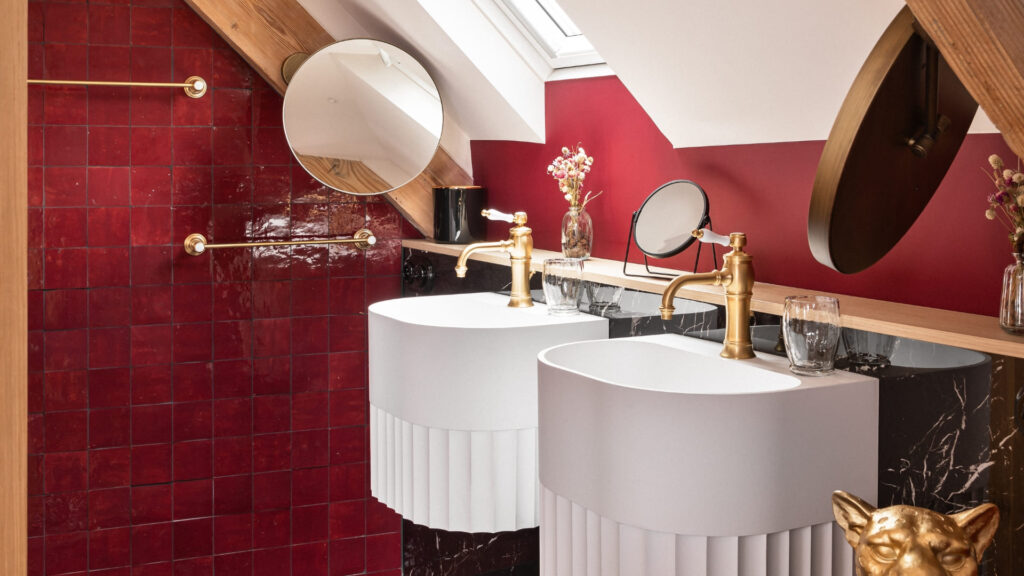
Designed to offer an extraordinary experience, this room features a generous double shower, ideal for sharing a moment of well-being with your partner. Everything here evokes the personality of a free, elegant and timeless woman, in the image of Josephine Baker.
A setting where luxury, poetry and comfort combine to make your stay a unique interlude in the heart of Brittany.
Enjoy an exceptional stay in the heart of Dinan
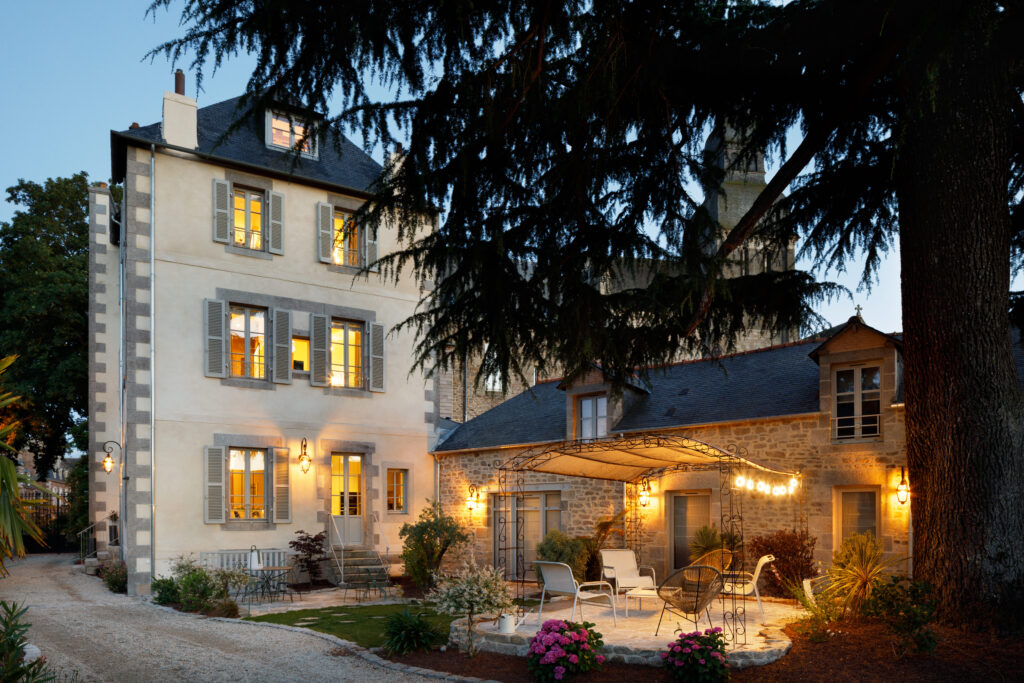
Clos du Cèdre is much more than just a boutique hotel : it’s a charming place where elegance, history and Breton authenticity meet.
To enhance your stay or event, Clos du Cèdre offers a selection of tailor-made extras.
Personalized services, gourmet attentions, wellness services… discover our options designed to make your experience even more pleasant and memorable.
Who is Josephine Baker?
Icon of the Roaring Twenties, courageous resistance fighter and civil rights activist, Josephine Baker is a major figure of the 20th century. Although she remains associated above all with Paris and the Château des Milandes, her career also crossed paths with Brittany, in a more discreet but no less symbolic way.
Born in the United States in 1906, Josephine Baker made a meteoric rise in France thanks to her daring shows, which left their mark on the collective imagination. But behind the artist lay a deeply committed woman: during the Second World War, she joined the intelligence services of Free France and used her fame as a cover.
This is where Brittany comes into the picture. Its ports, notably Lorient and Brest, served as strategic points of passage for resistance and exfiltration networks. Although precise archives are rare, several eyewitness accounts mention her travels in Brittany, disguised or accompanied, on confidential missions.
Beyond the historical facts, Joséphine Baker found in Breton culture an echo of her own struggles. Proud, resilient, rich in tradition, Brittany embodied a form of independence and dignity that she admired.
Even today, a number of cultural initiatives in Brittany evoke her passage and her commitment, as a discreet but powerful reminder of this free woman who, for the duration of a war, was also a little Breton.